Marlene Zerweck, LMFT #46386, Folsom, CA
Specialized Trauma Treatment with EMDR Therapy
Trauma Therapy
Not just what happened, but what stayed with you.
It's about what your system had to do to adapt ~ and what never had the chance to fully resolve.
Some trauma is clear and identifiable. But much of what I see is more subtle and cumulative:
- Feeling unseen, dismissed, or misunderstood over time
- Growing up in environments where emotions weren't supported
- Learning to stay alert, careful, or self-reliant to feel safe
Over time, these experiences shape how you relate ~ to yourself, to others, and to the world.
You may notice:
- Sensitivity to tone, conflict, or disconnection
- Difficulty relaxing, even when things seem "fine"
- Overthinking, self-doubt, or emotional overwhelm
- Anticipating and managing what might go wrong
These are not flaws. These are adaptive responses that made sense at the time.
In our work, we focus on helping your system process what it has been holding.
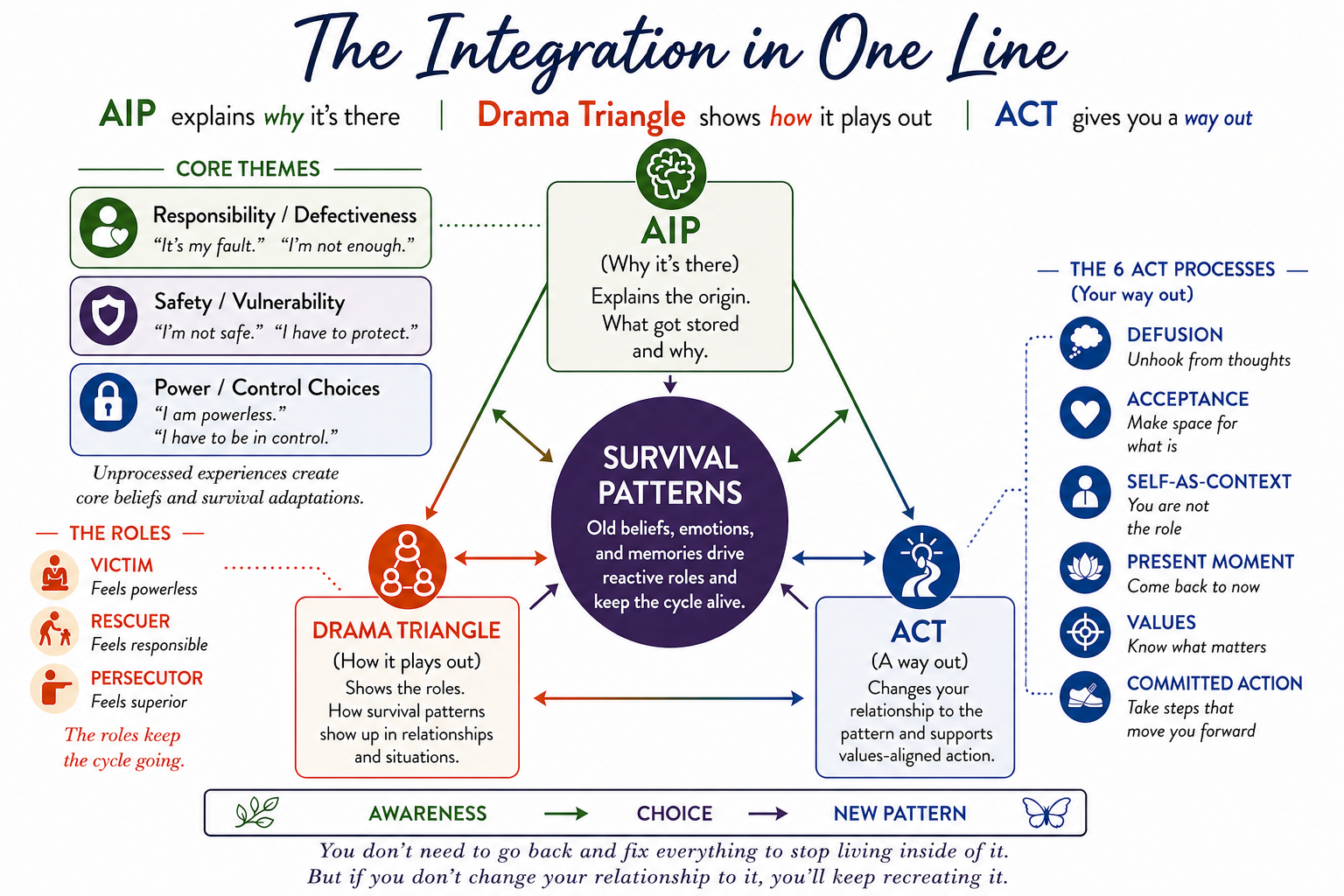
I integrate Eye Movement Desensitization & Reprocessing (EMDR) with Acceptance & Commitment Therapy (ACT) to help you:
- Process the root
- Recognize the pattern
- Choose a new path
This work is not about erasing the past; it's about honoring what happened while helping your nervous system recognize that the danger is no longer there.



EMDR Therapy
How EMDR fits into this work
In my practice, EMDR is not used in isolation ~ it's integrated into a relational, insight-oriented approach.
We don't just proceess memories. We also:
- Understand the patterns connected to those experiences
- Explore how they show up in current relationships
- Strengthen your abililty to stay grounded and connected to yourself
This allows EMDR to become more than symptom relief ~ it becomes part of meaningful, lasting change.
What EMDR can help with
EMDR is often helpful for:
- Trauma and complex trauma
- Emotionally difficult or overwhelming life experiences
- Anxiety and persistent overthinking
- Self-doubt and negative core beliefs
- Relationship patterns that feel hard to break
Many clients come in not thinking of their experiences as "trauma," but still feel the impact of them. EMDR helps make sense of that.
The deeper themes we work with
Much of this work centers around core emotional themes that develop early and continue into adulthood, such as:
- "Something is wrong with me," "I'm not good enough" (responsibility/defectiveness)
- "I'm not safe" (safety/vulnerability)
- "I have no control" (power/control)
Through EMDR, these beliefs can begin to shift ~ not through force, but through new internal experiences.